
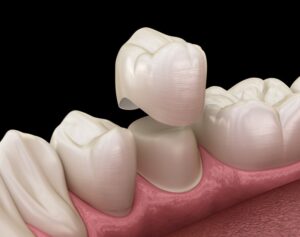
If you have a damaged or decayed tooth, your dentist may recommend either a dental filling or a dental crown. While both treatments restore teeth and protect them from further damage, they serve different purposes. The right choice depends on the extent of the damage, the strength of the remaining tooth structure, and your long-term oral health needs.
Here’s a closer look at when a filling may be appropriate and when a crown is the better option.
When a Filling is the Right Choice
Dental fillings are typically used to repair small to moderate areas of tooth decay or minor damage. During the procedure, your dentist removes the decayed portion of the tooth and fills the space with a durable restorative material.
A filling may be recommended when:
- The cavity is relatively small.
- Most of the natural tooth structure remains intact.
- The tooth is not cracked or severely weakened.
- The damage can be repaired without compromising the tooth’s strength.
Fillings are a conservative treatment option because they preserve more of your natural tooth. They are often completed in a single appointment and can provide many years of reliable function.
When a Crown is the Better Option
A dental crown is a custom-made restoration that covers the entire visible portion of a tooth. Crowns are often recommended when a tooth has suffered extensive damage and needs additional protection.
Your dentist may suggest a crown if:
- A large cavity has weakened the tooth.
- A significant portion of the tooth is missing.
- The tooth is cracked or fractured.
- You’ve recently had root canal treatment.
- An old filling has failed and little healthy tooth remains.
Because crowns completely encase the tooth, they provide greater strength and support than fillings. They can help prevent further breakage and restore normal chewing function.
Why Not Just Use a Bigger Filling?
Many patients wonder why a large filling can’t simply be used instead of a crown. While this may seem like a simpler solution, very large fillings can leave the remaining tooth vulnerable to cracking under normal chewing forces.
In these situations, a crown often provides better long-term protection and can help prevent the need for more extensive treatment later.
Your Dentist Will Help You Decide
The decision between a filling and a crown isn’t based solely on the size of a cavity. Your dentist will consider factors such as the tooth’s location, your bite, the amount of healthy tooth structure remaining, and your overall oral health.
Both fillings and crowns are effective ways to restore damaged teeth. Fillings are ideal for smaller repairs, while crowns are often necessary when a tooth requires additional strength and protection. If you have a damaged or decayed tooth, a dental examination can determine which option is best for preserving your smile and maintaining long-term oral health.
About the Practice
If you have a damaged or decayed tooth in need of repair, our highly experienced and passionate dental experts – led by Drs. Jonathan and Robert Hawley – can outfit you with a dental crown in no time to make you good as new! We carry a variety of dental materials for restorations, all of them high-quality, and have multiple payment options available to help you afford expert dental care. Book online or call our Abilene office at (325) 692-0565.